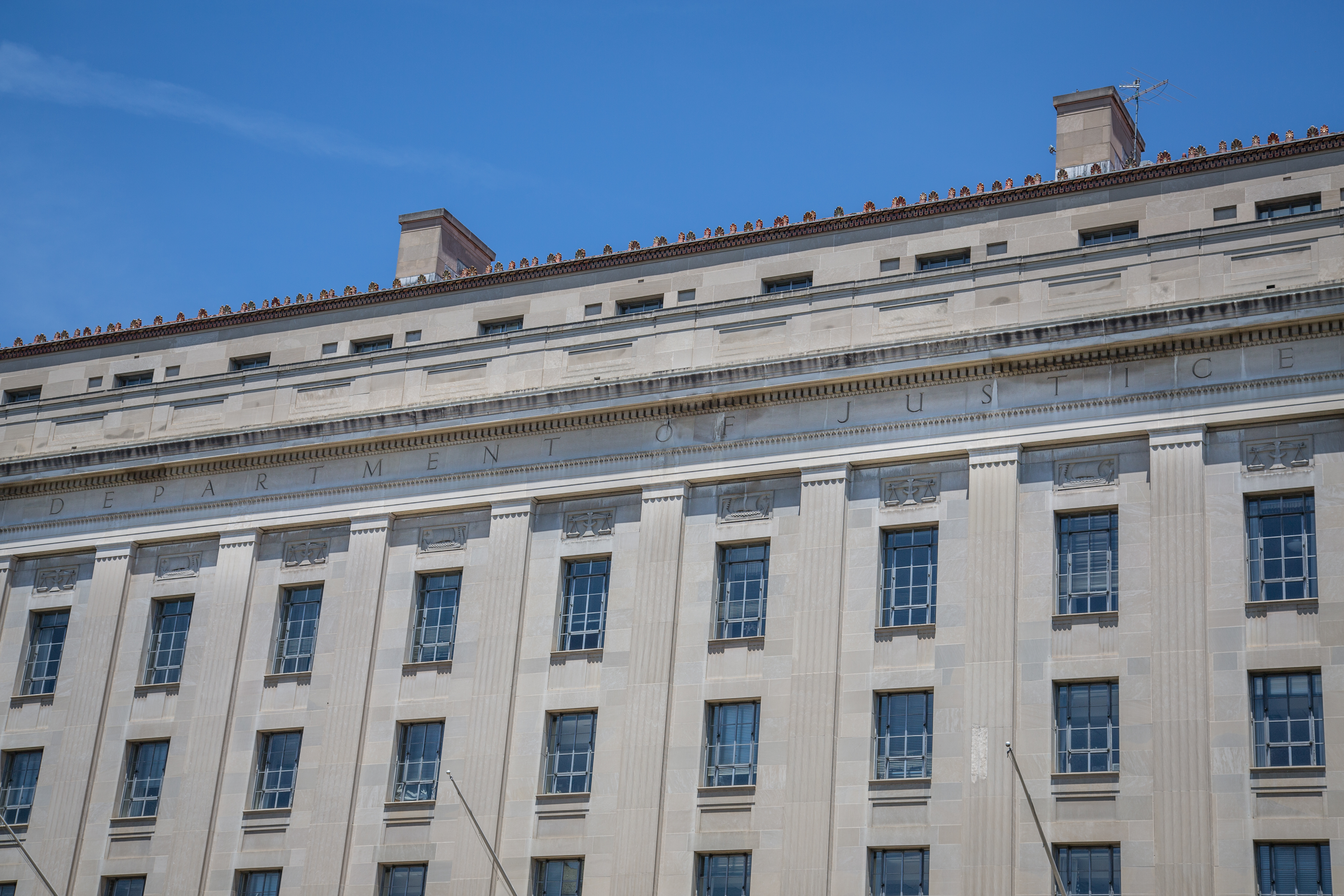
On 9 May 2025, the United States Attorney for the Southern District of New York filed fifty exhibits on a docket that no longer had a case attached to it. They were search-warrant papers: applications, affidavits, magistrate signatures, the accumulated paperwork of an investigation that had run from the summer of 2021 to the autumn of 2024. Names of agents and of people never charged were blacked out. Everything else went up where anyone could read it. courtlistener.com
Five weeks earlier the case those warrants belonged to had been ended for good.
The arithmetic of it is worth holding in mind. A grand jury had returned a five-count indictment against Eric Adams on 24 September 2024—conspiracy, wire fraud, two counts of soliciting a campaign contribution from a foreign national, and bribery under section 666. lawfaremedia.org He was arraigned three days later and entered a plea of not guilty on every count. courtlistener.com Judge Dale E. Ho set the trial for 21 April 2025, and in the months between he denied the mayor’s motion to throw out the bribery count, denied two motions alleging grand-jury leaks, and denied a request for a bill of particulars. The machinery was doing what machinery does. nysd.uscourts.gov
Then, on 10 February 2025, the acting deputy attorney general sent a memorandum to the acting United States Attorney in Manhattan directing her to drop it. The court later recorded that the memo reached its conclusion without assessing the strength of the evidence, and that it took care to say it was not questioning the integrity of the prosecutors who had brought the case. nysd.uscourts.gov
Danielle Sassoon wrote back to the Attorney General on 12 February, nine pages, and offered her resignation at the end of them. presidency.ucsb.edu It was accepted the next day. That same 13 February, five lawyers at the Justice Department in Washington resigned, among them the official who supervised the Public Integrity Section and the section’s acting head. On 14 February, Hagan Scotten, one of the assistant US attorneys who had been trying the case, sent his own resignation by email; he called the department’s first stated reason “so weak as to be transparently pretextual.” presidency.ucsb.edu Seven people in four days. That evening the motion was filed anyway, signed by three officials in Washington who had replaced the New York prosecutors as counsel of record. nysd.uscourts.gov
Adams has always said there was no arrangement. After a joint television appearance with the administration’s border official, he put out a statement saying he had never offered “any trade of my authority as your mayor for an end to my case. Never.” The court quotes it in full. nysd.uscourts.gov
What the judge then faced was a motion nobody opposed. The government wanted the case gone; so did the defendant. Rule 48(a) says the government may dismiss “with leave of court,” and a court with no adversary in front of it has nothing to weigh. So on 21 February Ho used the court’s inherent authority to appoint Paul Clement as a friend of the court, for the sole purpose of arguing the side that had stopped existing. courtlistener.com He filed his brief on 7 March. The opinion came on 2 April, seventy-eight pages, and it granted the motion in part and denied it in part: the indictment was dismissed, but with prejudice rather than without, so that the charges could never be brought back. nysd.uscourts.gov
Ho was careful about what he was not saying. His decision, he wrote, was not about whether the mayor was innocent or guilty; Adams was presumed innocent, and nothing in the ruling or its length should be read as a statement about the merits of the allegations. He was equally careful about what he was: a court cannot make the Justice Department prosecute anyone, and that limit, he said, is by design.
Then the paper started coming out. On 25 April the court unsealed a sealed order it had signed in February, on the application of a reporter from Inner City Press, on the reasoning that the interest which had justified the seal had gone when the case did. The same day it granted an application by the New York Times Company, joined by the publisher of the New York Post, for the release of the search-warrant materials; neither party opposed it. Two weeks later they were on the docket. In September the New York City Campaign Finance Board asked to be added to the case as an interested party, and the court’s protective order was amended twice more, in September and December 2025. courtlistener.com
The investigating did not stop when the case did. Prosecutors in Manhattan carried on with former members of his administration: his onetime chief adviser, Ingrid Lewis-Martin, was indicted by the district attorney in December 2024 on bribery charges, and has denied wrongdoing. thecityreporter.nyc An Associated Press report carried by NBC New York in January 2026 draws the boundary in one line: her case is unrelated to the federal indictment of Adams, and Adams is not accused of any wrongdoing in it. nbcnewyork.com
Adams himself left the Democratic primary the day after the dismissal and ran as an independent, then abandoned the campaign in September 2025. His single term ended on 31 December. thecityreporter.nyc
Comment
The Question No Court Will Answer
Dismissal with prejudice is the strongest ending American criminal procedure offers short of a verdict, and it is not a verdict. It is not an acquittal, which is a jury’s answer. It is not a conviction. It is the closing of a door, and the door closed with the room still dark.
That leaves a shape this desk sees constantly abroad and almost never at home: a file thick with documents and no finding attached to any of them. Adams stands convicted of nothing, which is his right and his position, and he has said plainly that he did nothing to earn the charges. The prosecutors who resigned put their reasoning in writing and it can be read. The judge put his in writing and it can be read at length. What cannot be read anywhere is the one document the whole apparatus exists to produce, because twelve people were never asked.
The court’s own view of its role is the useful part. Ho described what he could do under Rule 48(a) as shining a light on the reasons the department gave, and leaving the most important judgment to the public. That is a modest claim, and it is also an accurate description of what the American system does when the power to charge and the power to stop sit in the same building. The check is publicity. Here the publicity worked well: the memo, the letters, the briefs and eventually the warrants all became public, and much of that happened because three news organisations went to the court and asked. What none of it produced was an answer.