On 14 August 2025 a charge came off several million Ohio electricity bills.
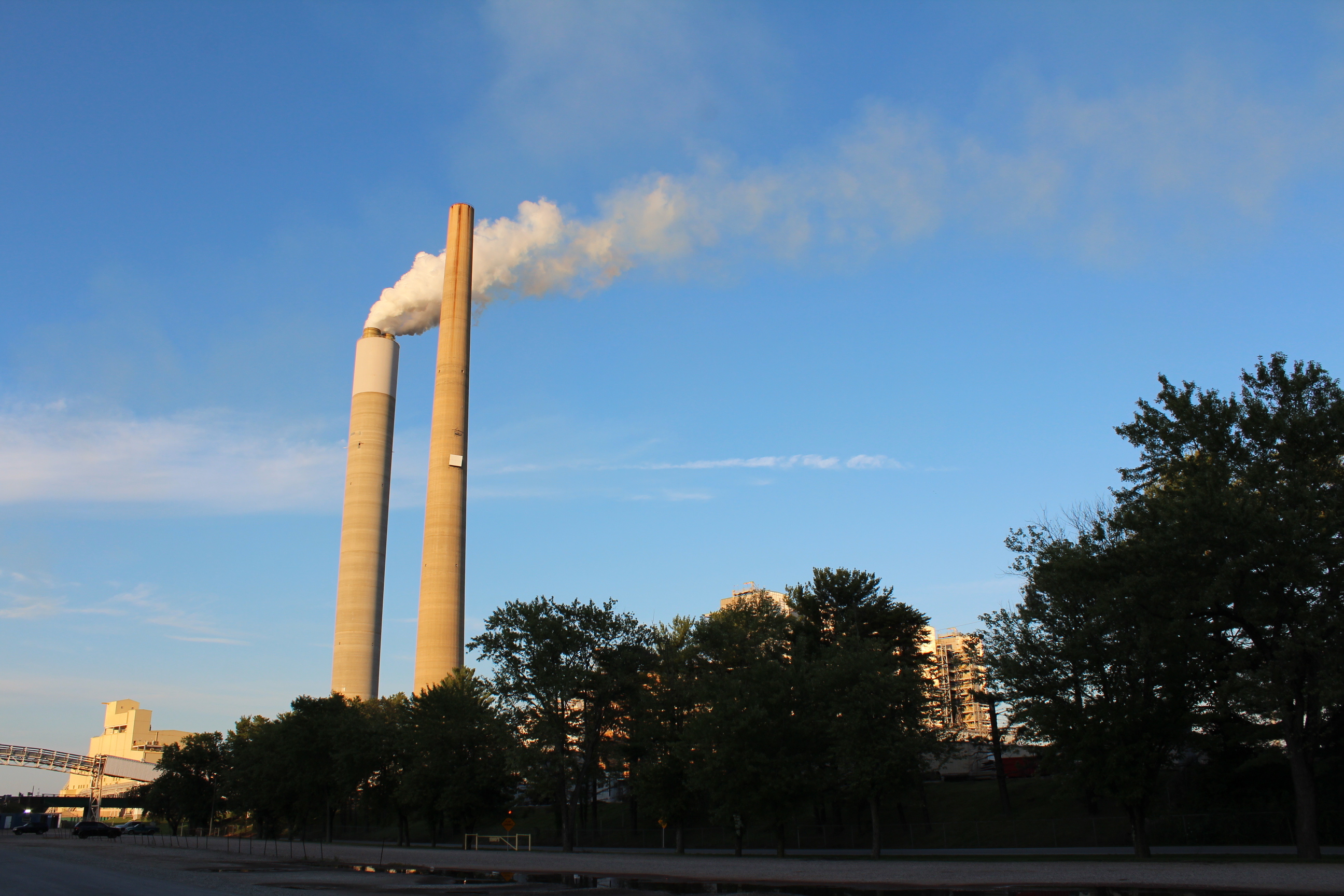
It was small, and it had been there a long time. Since January 2020 every household on the system had been paying a few cents a day toward two coal-burning stations built in the Eisenhower years, one of them not even in Ohio, both owned jointly by a company Ohio’s utilities have shares in. By the time the charge stopped, the state’s own advocate for residential customers, the Office of the Ohio Consumers’ Counsel, reckoned Ohioans had put nearly half a billion dollars into keeping them running. occ.ohio.gov
How the charge got there is not a matter of inference. In 2019 the Ohio House passed House Bill 6, which put ratepayer money behind two nuclear plants and those two coal plants and cut the state’s renewable and efficiency standards. It cleared the chamber on its final vote 51 to 38. ohiohouse.gov Three and a half years later a federal jury in Cincinnati concluded that the Speaker who moved it, Larry Householder, had taken close to sixty million dollars from a utility in exchange for pushing its rescue through the legislature and then killing the referendum that would have let voters undo it. He drew twenty years, the most the racketeering statute allows. The Sixth Circuit upheld all of it in May 2025. opn.ca6.uscourts.gov On 27 April 2026 the Supreme Court declined to look at the case, which ended his appeals. ohiocapitaljournal.com
Undoing it took a different kind of vote. House Bill 15 ran through the House 92 to 3 in March 2025, through the Senate without a single no in April, and back through the House 94 to 2 on the day the Senate finished. ohiohouse.gov Governor Mike DeWine signed it on 15 May. ohiohouse.gov The bill’s long title is unusually blunt about what it was for: it ends by saying it exists to repeal parts of H.B. 6 of the 133rd General Assembly. ohiohouse.gov
Comment
The Question a Repeal Cannot Answer
On the coal charge itself, nothing.
Ohio’s consumer counsel and the state’s manufacturers had asked regulators, and then the courts, to make American Electric Power hand back $74.5 million collected under the coal rider in 2018 and 2019 on the argument that running plants at a loss was never in customers’ interest. On 30 April 2026 the Ohio Supreme Court ruled against them, unanimously. Justice Pat Fischer wrote that whether a decision was prudent has to be judged as of the moment it was made, not with the benefit of what came after. The Consumers’ Counsel said afterward that the decision leaves Ohioans paying for tens of millions of dollars of costs from uneconomic plants, and that lawmakers had stopped the charges going forward while the court denied relief for what had already been taken. statenews.org
Money did come back, though, and it is worth being precise about where from, because it was not from the repeal. On 19 November 2025 the Public Utilities Commission of Ohio found FirstEnergy’s three Ohio utilities in violation of state law, of its own rules and of its own orders. On 7 January 2026 it approved a settlement: $249 million in restitution to customers across three billing periods, another $20 million for low-income programmes, a $6.6 million refund with roughly $6.2 million of interest on top, and $5 million to a trade group over corporate-separation breaches. “This order brings finality to these four cases and most importantly returns these dollars to the FirstEnergy customers,” the commission’s chair, Jenifer French, said. puco.ohio.gov Different company, different pot, different machinery, and a regulator rather than a legislature.
FirstEnergy itself was charged in July 2021 with conspiring to commit honest services wire fraud and entered a deferred prosecution agreement, paying a $230 million penalty and admitting it had conspired with public officials. statenews.org An agreement of that kind establishes nothing against any individual, and the individual cases are not finished. Two former executives, Chuck Jones and Michael Dowling, have pleaded not guilty in a state prosecution and in a pending federal one; their first state trial ended with a hung jury in March 2026 and they were charged again in June. ohiocapitaljournal.com
What Is Still Open
The other half of House Bill 15 was a wall. It barred Ohio’s regulated distribution utilities from owning generation at all, which is the structural reason a monopoly cannot quietly move its losses onto a bill people have no choice but to pay.
Ten months after the law took effect, a member of the committee that wrote it was drafting a door through the wall. Rep. Adam Mathews, a Lebanon Republican and vice chair of House Energy, confirmed in early March 2026 that he was working on language to let distribution utilities build and run nuclear plants. He said the text was unfinished, unfiled and might never be filed, and he was emphatic about the terms: anything introduced, he said, would make sure nothing fell on the ratepayers, and any bill would be for more nuclear generation and not on the back of ratepayers whatsoever. Noah Dormady, an Ohio State economist who testified for the prosecution at the Householder trial, read the same draft and called it giving the devil a foothold, pointing to a clause routing prudently incurred costs of the plant into distribution rates. ohiocapitaljournal.com
There is a second argument about what the repeal cost, and it belongs to a party rather than to the record. Cathy Cowan Becker, board president of Save Ohio Parks, wrote in March 2025 that the same legislation compresses power-siting review to 45 days for a large plant on land its applicant owns, with no local sign-off, and that the demand pulling it along is data centres. That is her case, made while the bill was still moving, and it is contested. ohiocapitaljournal.com
What is not contested is the arithmetic. A statute that a jury found had been bought took six years and a near-unanimous vote to unwind, and the money it moved in the meantime stayed moved.